
What makes a successful tech stock?


Sponsored by


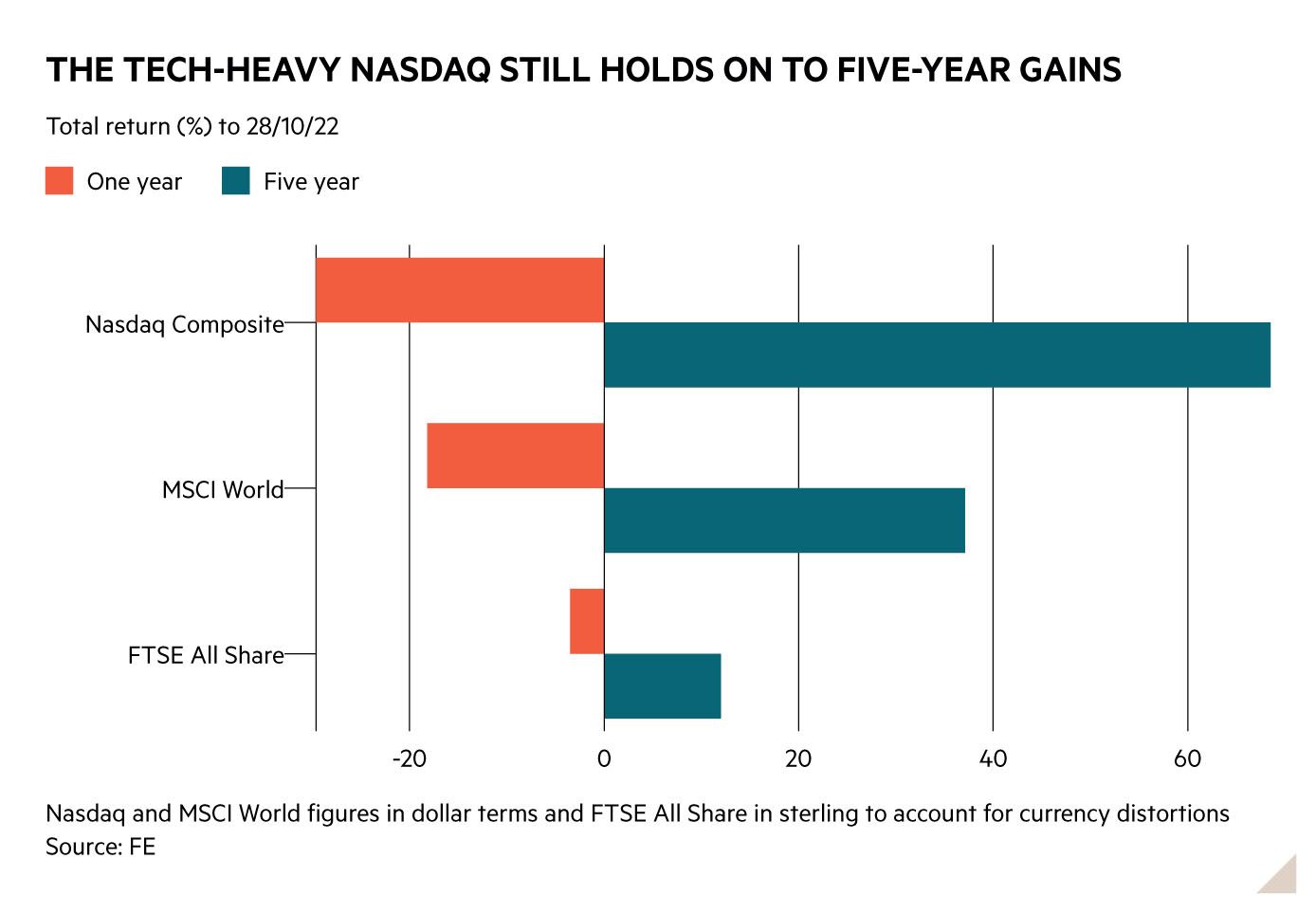
High inflation, a grim economic outlook and the prospect of further interest rate increases all appear to spell more bad news for tech investors after an already challenging year. The tech-heavy Nasdaq Composite index is down by around 30 per cent in the 12 months to 27 October, taken in US dollar terms, and a recovery is not obviously imminent.
The second half of October, for one, has seen major share price falls for some of the biggest US tech stocks as companies such as Meta Platforms (US:META) and Amazon (US:AMZN) bring out some discouraging trading updates. A good number of investors appear to be voting with their feet for now.

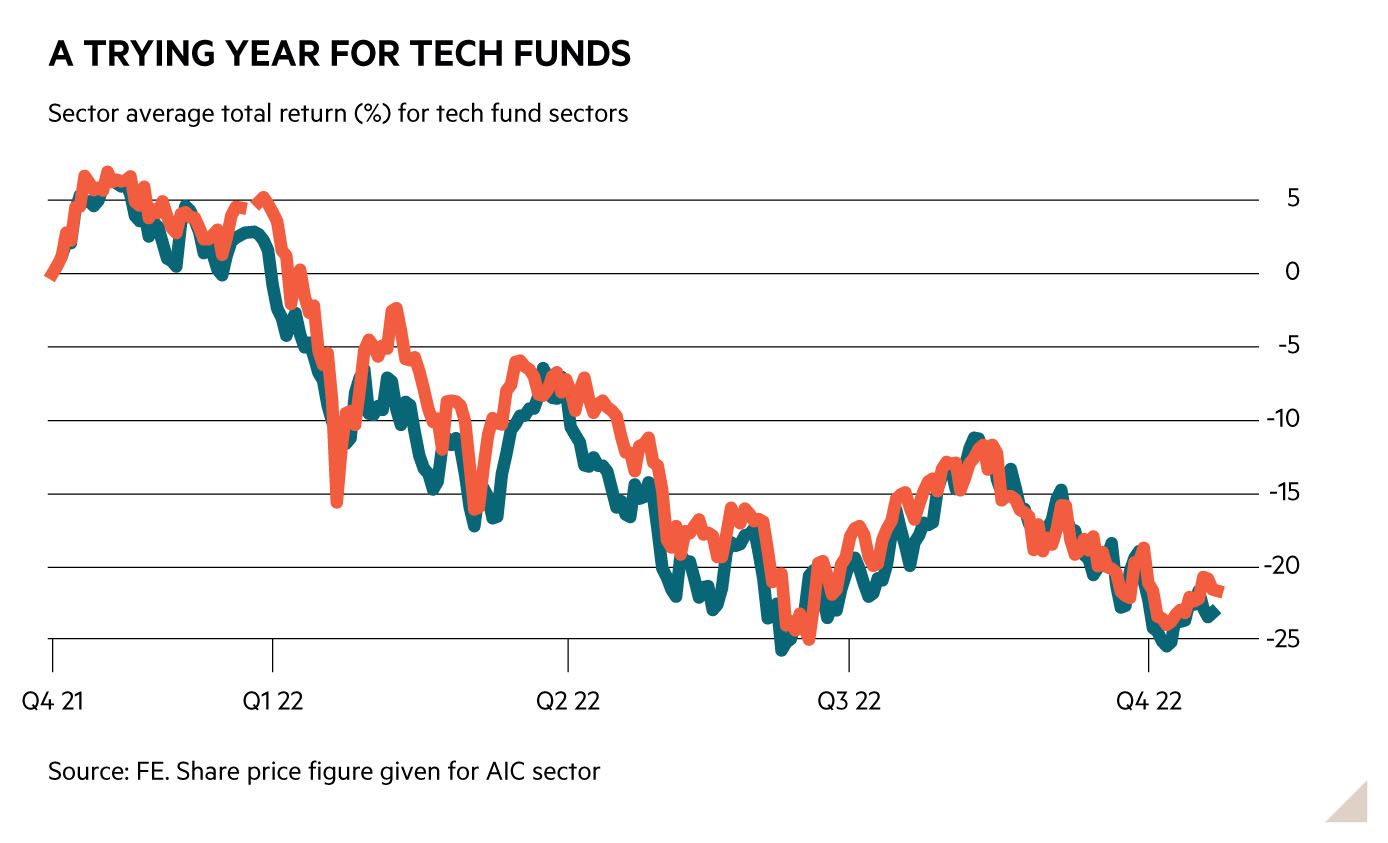
A disciplined or contrarian investor could rightly argue that now is the time to focus on the sector or at least stick with an allocation to the area at a time when others are bailing out. The shares arguably look much cheaper than they have done in recent years, and the use of tech seems only likely to spread further into businesses and our everyday lives – offering up a compelling secular trend for investors to exploit. But the very real challenges facing the sector remind us how good investment practices and selectivity remain vital.
Don’t panic but get picky


The latest Investors’ Chronicle webinar, What makes a successful tech stock?, inevitably threw up some pressing and difficult questions about whether recent weeks and months have presented an ideal time to invest and which themes and companies show the most promise. The answers to some of these questions do remain elusive.
Whitechurch Securities investment manager Tim Jones, one of the panellists in our debate, noted that it remained hard to tell if markets had reached an “inflection point”, though it did feel as though the sell-off would lose momentum at some point. Likewise, Cameron James founder Dominic James Murray warned that market timing was “not really an advisable strategy”, with investors being better served by entering the market and staying there, while also using techniques such as regular investing to offset the ups and downs of valuations.
companies with strong brands and good business models have maintained good returns over a decent time period
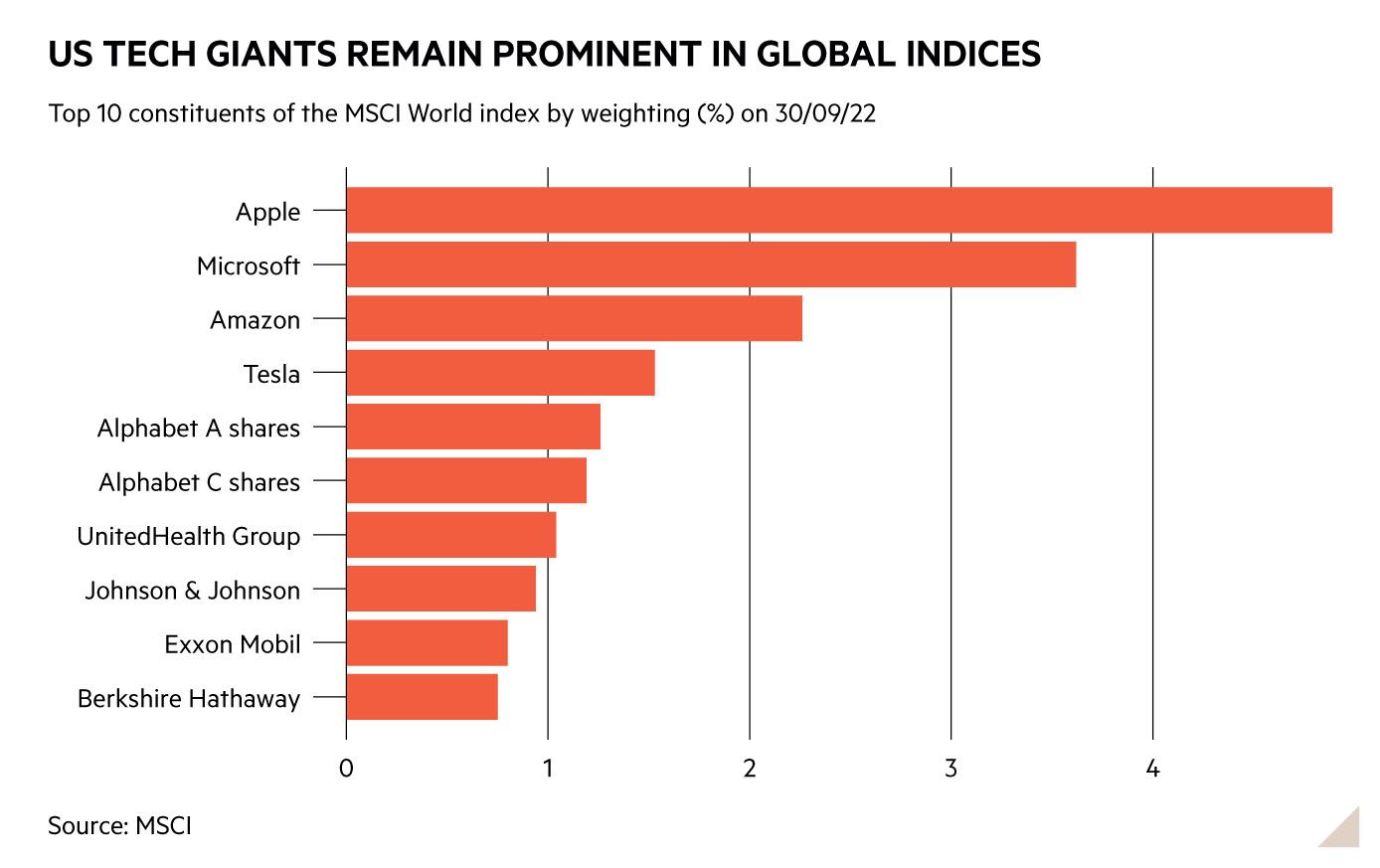
However, something highlighted by the panel and revealed by the sell-off of the past year or so was the importance of selectivity in a sector where hype can build and valuations can get stretched. Jones stressed the need to be “hyper selective and decipher what is profitable tech and non-profitable tech”. He noted that companies with strong brands and good business models had maintained good returns over a decent time period even once the dire performance of the last year had been accounted for – pointing to some big five-year returns from Microsoft (US:MSFT) as an example.

DIVIDING LINES


What’s more challenging for the stockpicker is picking out a profitable tech company at a time when fundamentals and balance sheet strength really matter. Another panellist, Allianz Technology Trust (ATT) portfolio manager Mike Seidenberg, noted that he would always look for businesses with profits, but also favour companies with a sustainable competitive advantage and a gross margin structure lending itself to a robust operating margin over time, among other things. “If a business is going to be a good stock it needs cash flow generation and scale,” he added.
Within the Allianz portfolio Seidenberg has seen software companies holding up fairly well
Tech companies have certainly had divergent fortunes in the past year or so. Within the Allianz portfolio Seidenberg has seen software companies holding up fairly well, with businesses focused on areas such as cyber security and management of the cloud looking good. The team also likes some specialised semiconductor companies, while backing secular themes such as tech’s role in the transition to cleaner energy.
Other dividing lines could also be of importance, with Jones pointing to the very different prospects of companies offering services that are now essential to their customers, such as Microsoft, versus the more discretionary offerings of names such as Peloton (US:PTON). Discretionary spending could look increasingly fragile as consumers tighten their belts.


The haystack


If selectivity is key, there’s an argument that DIY investors lack the resources to pick exactly the right stock or asset to get the best out of a promising trend. Speaking of the sell-off in more speculative assets this year, chartered financial planner Victoria Naborro noted: “What NFT and crytpo has taught retail has taught retail investors is […] how bad individuals are at finding value amid so much hype and noise.”
Investors may therefore wish to stick with a broader allocation to tech via a fund, be it a sector-focused vehicle or something with an even wider remit. Investors might also wish to exercise caution when focusing specifically on a new trend, such as the metaverse, given how difficult it can be to pick out a future winner. As Murray put it, investors taking a shot on specific themes or companies winning out should be using the money they can afford to potentially lose.
And yet the sell-off may have helped instil some good practices in certain investors. Nabarro noted that clients she had spoken with had seemed relatively relaxed about bouts of short-term volatility. Any such long-term outlook, combined with the promising secular trends within the tech space, could result in good returns over time.

For more videos from this webinar:
Finding resilience in the tech sector
Have valuations reached a trough?
Sponsored by

 Built with Shorthand